
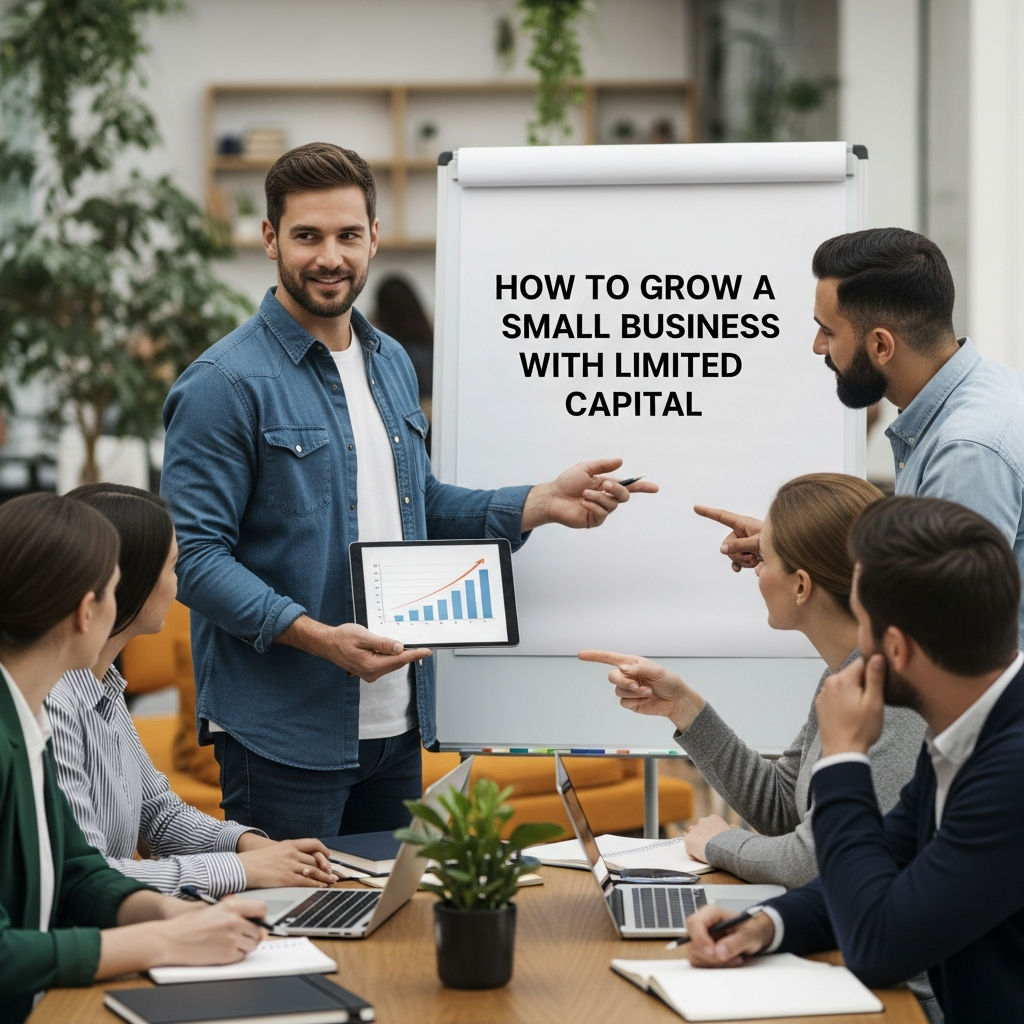
How to Grow a Small Business with Limited Capital: Expert Strategies for Bootstrapped Success
Starting and scaling a business is a monumental task, and the challenge is amplified when capital is scarce. Many entrepreneurs dream big but face the harsh reality of constrained budgets. However, limited funds do not equate to limited potential. In fact, restrictions often breed innovation. The philosophy of ‘bootstrapping’—building a company from personal resources or early operating revenues—is a tried-and-true path to sustainable growth.
This comprehensive guide explores practical, actionable strategies for small business owners looking to maximize growth and minimize expenditure, ensuring every dollar invested yields maximum return.
Mastering the Bootstrapping Mindset and Financial Discipline
The foundation of growing a business with limited capital lies in strict financial discipline and an unwavering commitment to efficiency. Bootstrapping is not just a funding method; it is a business philosophy.
Prioritize Revenue Generation Over Investment Attraction
While chasing investors can be tempting, the best “funding” comes from customers. Focus intensely on creating a minimum viable product (MVP) and generating early sales. Early revenue validates your model, proves market need, and provides non-dilutive capital for immediate reinvestment.

Focus on Rapid Prototyping and Early Sales
Get your product or service in front of paying customers as quickly as possible. Use feedback from these early adopters to iterate and improve. This rapid feedback loop ensures you are spending time and money only on features customers are willing to pay for.
Reinvest Profits Immediately and Wisely
When initial profits arrive, resist the urge to increase personal draw. Instead, earmark specific funds for critical growth areas, such as inventory or essential marketing tools. Treat your early profits as seed capital for the next stage of growth.
Implement Lean Operations and Expense Minimization
A lean operation means eliminating waste in all forms. This includes unnecessary software subscriptions, lavish office space, and excessive inventory holding.
Adopt the “Zero-Based Budgeting” Approach
Instead of relying on previous budgets, a zero-based approach requires justification for every single expenditure in the new period. Ask relentlessly: Is this expense absolutely necessary for immediate revenue growth?

Leverage Free and Low-Cost Digital Tools
Avoid expensive enterprise software. Utilize the vast array of free or freemium tools for essential business functions: G Suite for productivity, HubSpot CRM for sales tracking, Canva for basic design, and free accounting software trials.
Strategic, Low-Cost Marketing and Customer Acquisition
Marketing can consume huge budgets, but smart entrepreneurs utilize targeted, high-impact strategies that leverage time and creativity more than cash.
Harnessing the Power of Content Marketing and SEO
Content marketing is arguably the most powerful long-term, low-cost marketing strategy. By creating valuable, relevant content, you attract customers naturally through search engines, drastically reducing dependence on costly paid advertising.
Target Long-Tail Keywords with High Intent
Focus your SEO efforts not on broad, competitive terms, but on specific, detailed “long-tail” phrases that reflect a customer ready to buy or solve a specific problem (e.g., “affordable small business accounting software for freelancers”).
Guest Blogging and Collaboration
Pitch content to established blogs and industry publications. This provides immediate access to their existing audience, boosts your domain authority, and positions you as an expert—all for the cost of your time.
Building a Community on Social Media
Organic social media marketing, when done authentically, builds loyalty and brand visibility without needing large ad spends. Focus on engagement rather than follower count.
Focus on One or Two Key Platforms
Don’t spread resources thin across every platform. Identify where your ideal customer spends the most time and dedicate your energy entirely to mastering organic engagement there.
Encourage User-Generated Content (UGC)
Incentivize customers to share their experiences with your product. UGC serves as powerful, authentic social proof that bypasses the need for expensive professional photography or testimonial videos.
Operational Efficiency and Outsourcing Alternatives
As the business grows, the need for human capital becomes inevitable. Smart growth requires strategically acquiring talent or services without the burden of immediate, full-time payroll.
Smart Delegation Through the Gig Economy
The modern gig economy allows small businesses to access high-level expertise on an as-needed basis, avoiding the overhead of employee benefits, taxes, and fixed salaries.
Outsource Non-Core Functions (The 80/20 Rule)
Delegate tasks that consume 80% of your time but only contribute to 20% of your core revenue (e.g., bookkeeping, minor tech support, social media scheduling). Use platforms like Upwork or Fiverr for reliable, project-based help.
Utilize Internships and Apprenticeships
Offer structured, mutually beneficial opportunities to students or recent graduates. This provides enthusiastic, low-cost labor in exchange for valuable real-world experience and mentorship.
Optimizing Cash Flow and Inventory
Cash flow is the lifeblood of a bootstrapped business. Effective management means speeding up receivables and slowing down payables.
Negotiate Favorable Payment Terms
Whenever possible, negotiate net-30 or net-60 terms with your suppliers, giving you longer to pay for inventory. Simultaneously, enforce net-7 or net-15 terms for your own invoices to speed up incoming cash.
Pre-Sell Products or Services
If you offer services or physical products, consider pre-selling them. Collecting deposits or full payment upfront generates immediate capital for production or delivery, effectively turning your customers into your investors.
Seeking Non-Traditional Funding Sources
If external funds are truly necessary, look beyond venture capital to non-dilutive or community-focused sources.
Explore Grants and Small Business Loans
Government agencies and private foundations offer various small business grants that do not require repayment. Similarly, microloans from community development financial institutions (CDFIs) often have more flexible terms than traditional bank loans.
Focus on Industry-Specific Grants
Research grants specific to your industry (e.g., technology, sustainability, food services) or demographic (minority-owned, women-owned). These niche opportunities often have fewer applicants.
Leveraging Peer-to-Peer Lending and Crowdfunding
Platforms that connect lenders directly with small businesses can offer flexible terms. Crowdfunding, whether through rewards-based models (Kickstarter) or equity-based models, allows the public to fund your growth in exchange for early access or a small stake.
Conclusion: The Path to Sustainable Growth
Growing a small business with limited capital is a testament to entrepreneurial ingenuity. It requires resilience, creativity, and ruthless efficiency. By mastering the bootstrapping mindset, prioritizing revenue generation, implementing lean operations, and utilizing smart, low-cost marketing strategies, entrepreneurs can build robust, sustainable businesses that are not only profitable but also deeply rooted in the principles of financial independence and calculated risk.
The ultimate reward of bootstrapping isn’t just growth; it’s the ownership and control you maintain over your business’s destiny.