


Westpac hosts Perth leaders to discuss AI’s role in professional
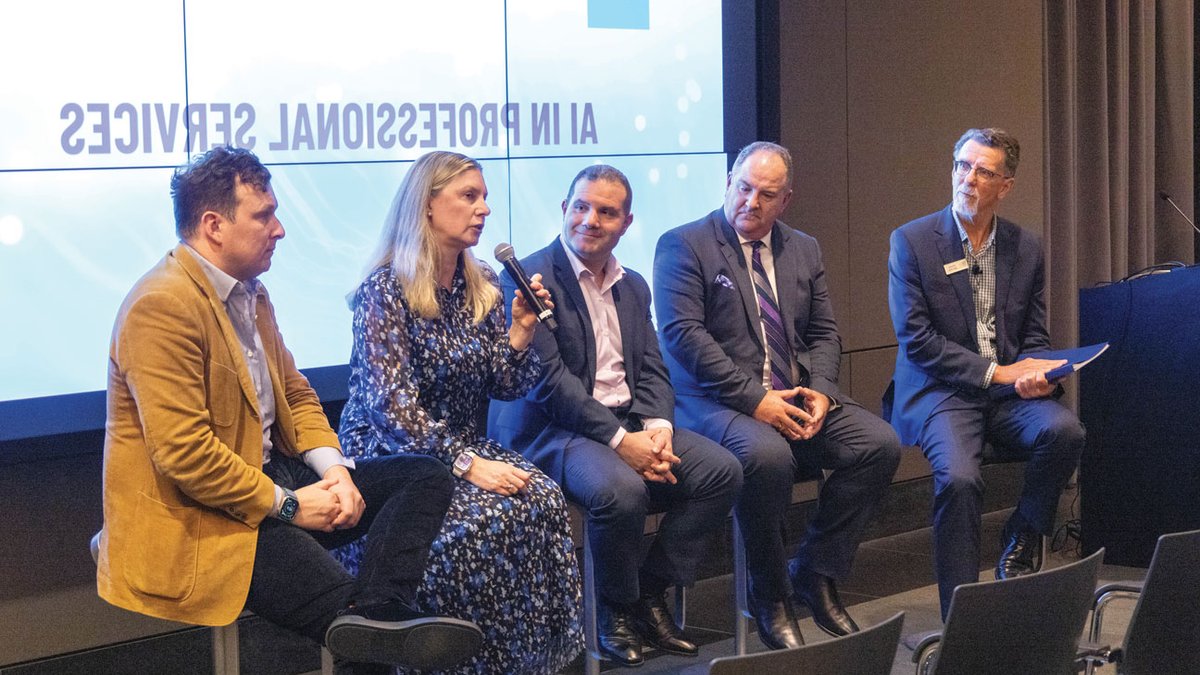
Westpac Bank gathered over 60 Perth business leaders to examine how artificial intelligence is altering professional services, including law, accounting, and advisory work. The session, led by Business News Senior Editor Mark Beyer, included partners and directors from Moore Australia WA, Jackson McDonald, HLB Mann Judd, and Pragma Lawyers. Participants acknowledged that while AI delivers faster processes and cost reductions, its limitations—such as accuracy issues, data risks, and the need for professional judgment—require cautious implementation.
AI’s Impact on Routine Tasks
AI integration is already widespread in daily operations across professional services. Jackson McDonald uses Microsoft Copilot and CoCounsel for document reviews, summaries, chronologies, and other AI tools for contract creation and legal research. Elizabeth Tylich, the firm’s chairperson, said, “We are using different AI products within our business services to identify efficiencies in process flows. In our legal work, we are using tools such as Copilot and CoCounsel for document reviews, summaries, chronologies and other AI tools for contract creation and legal research. What we are seeing is opportunity.”
Moore Australia WA adopted Copilot Premium to accelerate tasks like financial modeling. Davide Costanzo, a partner at the firm, explained that a team previously spent seven to ten hours building a financial model, but now the task takes just one hour. However, he cautioned that AI-generated information must be carefully reviewed. “AI can produce incorrect information with confidence, misunderstand context or overlook nuances an experienced professional would recognise,” he said. “We are getting value from Copilot and other collaborative AI tools. They are great, but there is also a significant cost.”
Pragma Lawyers selected Harvey, an AI platform designed for legal workflows, after assessing data security and ease of use. Aaron McDonald, the firm’s managing director, said it is an effective tool for processing large volumes of information. “It’s a great sparring partner. It gets you 80 per cent of the way there,” he said. “That can be a massive value-add for clients.”
Read Also: Mexico Trucker Protest Heightens US Visa Dispute
The balance between automation and professional discretion was a recurring theme. Firms risk diminishing the refined judgment clients depend on, even as AI speeds up routine tasks. The issue extends beyond technical concerns to cultural shifts. Norman Neill, managing partner at HLB Mann Judd, framed the challenge as risk management. “The goal is to reduce repetitive tasks,” he said, “without introducing new errors.”
Financial and Security Considerations
The panel also addressed the financial implications of AI adoption. Implementation costs—including enterprise platforms, cybersecurity measures, and training, are substantial, and firms are still evaluating whether the benefits outweigh the expenses. Tylich said the process is expensive and firms remain early in understanding the commercial return. “The process is expensive, and we are definitely on a learning curve,” she said.
Return on investment depends on more than time savings. Clients may expect faster service to translate to lower fees, but firms could instead redirect resources to handle more work or allocate staff to higher-value activities. The discussion suggested that firms rethinking how to deploy professional time will gain a competitive edge, not just by cutting expenses, but by reallocating resources effectively.
Data security adds another layer of complexity. Employees may use unauthorized AI tools, exposing confidential client information. Neill mentioned that his firm’s IT team monitors unauthorized software use. “We have audit checklists for other processes,” he said. “We need similar controls for these tools.”
Unlike previous technological shifts that eliminated entire roles, AI in professional services appears to be reshaping rather than eliminating jobs. Firms still require personnel, but the necessary skills are evolving. Costanzo noted that Moore Australia WA continues hiring graduates but is adjusting training to emphasize critical thinking. “We’re training them to assess AI outputs,” he said. The aim is not to replace human judgment but to ensure professionals can evaluate AI’s accuracy.
Read Also: Jury Deadlocked in NOLA Murder Scam Trial
Graduates and the Evolution of Work
The conversation extended to how AI affects graduate development. Traditionally, junior staff gained experience through repetitive tasks like document review or research. With AI handling much of that work, firms must determine how to maintain skill development. Neill stated that his firm hasn’t reduced staffing yet, but roles may shift. “We still need people,” he said. “It is about the skill set and how we upskill people more quickly.”
Costanzo confirmed that Moore Australia WA remains active in recruitment but is modifying training programs. “Our training approach has changed,” he said. The priority is not job elimination but preparing the next generation to collaborate effectively with AI.
A lingering question remains: If AI handles more repetitive work, what becomes of the professionals who once performed it? The panel acknowledged no simple answers, but the consensus was clear, firms must adapt training to ensure graduates develop skills AI cannot replicate. This includes teaching them to detect inaccuracies, question outputs, and deliver advice that AI cannot provide: independent, context-aware, and tailored to clients.
AI is transforming professional services by automating mundane tasks, but its adoption forces firms to address deeper issues about expertise, trust, and the future of work. The technology is not a solution in itself, it requires careful management. Currently, the most successful firms are those balancing speed with judgment, efficiency with accountability, and innovation with caution.


