


China rises as geopolitics redraws port rankings
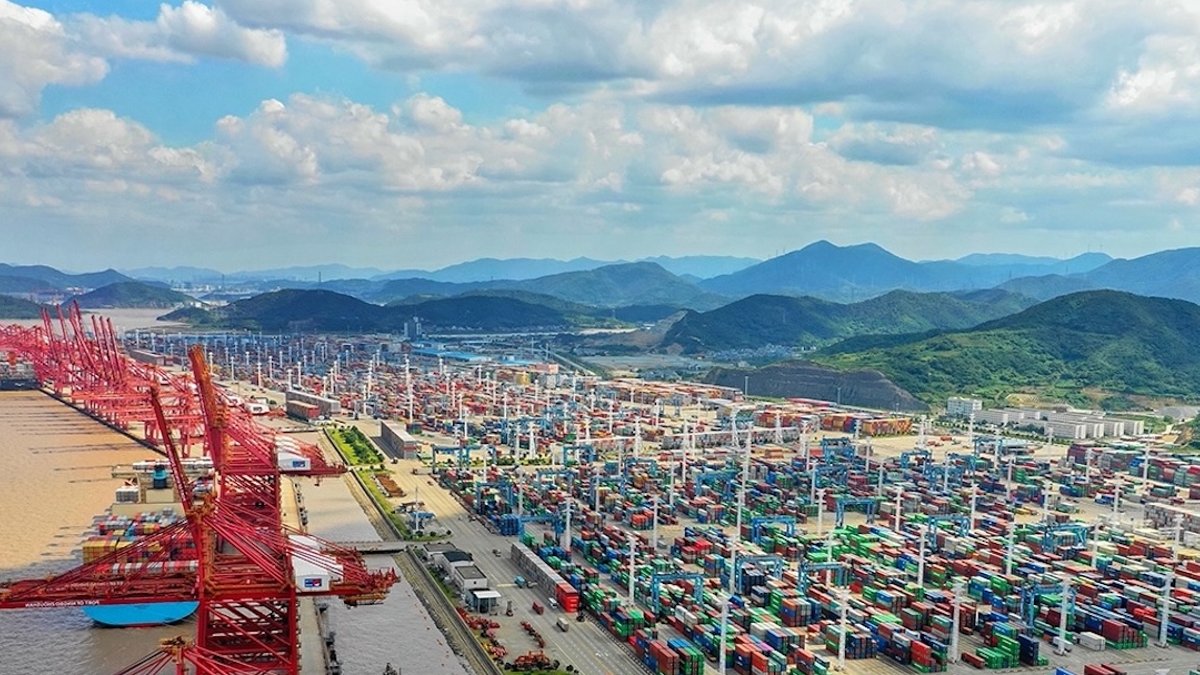
The global container-port hierarchy shifted sharply in the first half of 2026, with Ningbo-Zhoushan overtaking Singapore for second place and Port Klang, Malaysia entering the top 10. The biggest reversal occurred in the Middle East, where Dubai’s Jebel Ali fell from 10th to 32nd as disruptions from the Iran war around the Strait of Hormuz diverted cargo and forced carriers to redesign their networks.
China’s Shanghai remained the world’s busiest container port, handling about 28.7 million container units in the first six months of 2026, a 6.2% increase from the same period a year earlier, according to Alphaliner. Ningbo-Zhoushan handled 22.9 million TEUs, up 8.8%, narrowly passing Singapore, which processed approximately 22.7 million TEUs, up 4.7%.
Related: Freight firms file for bankruptcy amid crisis
The gains come as China finds new markets for exports despite attempts by the Trump administration to blunt Beijing’s economic dominance through trade and tariff policy. The margin was only 158,310 TEUs, making the contest for second place highly vulnerable to normal seasonal swings during the rest of the year. Ningbo-Zhoushan’s first-half performance nevertheless marked the first time it had ranked ahead of Singapore over a six-month period.
China held six of the top 10 spots. Shenzhen, Qingdao, Guangzhou and Tianjin ranked fourth through seventh, followed by Busan in eighth, the combined Los Angeles-Long Beach U.S. gateway in ninth and Malaysia’s Port Klang in 10th.
The latest reshuffling builds on China’s strong full-year performance in 2025. Shanghai handled a record 55.06 million TEUs, while Singapore processed 44.66 million and Ningbo-Zhoushan reached 43.87 million. Ningbo’s 11.6% growth was the strongest among the three leading ports.
Related: Evan Buie Joins Global Affairs Canada
No port experienced a more dramatic reversal than Jebel Ali. The Dubai hub handled only 3.14 million TEUs in the first half of 2026, less than half the 7.77 million TEUs recorded in the first half of 2025. The decline accelerated in the second quarter, when throughput fell more than 90% year over year to just 374,000 TEUs. The port consequently dropped from 10th place in the global rankings at the end of 2025 to 32nd in Alphaliner’s half-year assessment.
The immediate cause was the disruption surrounding the Strait of Hormuz. The waterway was nearly closed in March, followed by only a partial and unstable reopening in June. Carriers reduced or altered calls in the Persian Gulf, while shippers sought alternative routes and relay points.
The Middle East disruption is part of a broader reorganization of relay traffic. Cargo moving through transshipment hubs shifted toward southeast Asia as carriers continued to avoid the Red Sea and route more vessels around Africa’s Cape of Good Hope. This helped Singapore, Tanjung Pelepas in Malaysia and Colombo, Sri Lanka. Tanjung Pelepas recorded the fastest growth among the leading ports, increasing throughput 14.5%, or nearly 1.8 million TEUs, and rising from 16th to 13th place.
Related: Private fleets offer brokers $100B untapped capacity
Alphaliner estimated that throughput at the world’s leading container ports rose 5.2% in 2025, compared with 4.7% growth in the broader container trade. Other ports also advanced, including Colombo (26th to 20th), Nhava Sheva (28th to 21st) and Jakarta (27th to 23rd). Meanwhile, Hamburg (23rd to 27th), Kaohsiung (22nd to 24th) and Mundra (24th to 26th) slipped in the rankings.
In 2025, the top 20 container ports handled nearly 450 million TEUs, an increase of roughly 5% to 6%. Fifteen were in Asia, with China accounting for nine. U.S. and European gateways remain important, but their presence near the top of the global volume table is narrowing, with only the combined LA-Long Beach gateway in the first-half top 10.


